Skip to content
XANAKA
XANAKA
EnquireWhatsAppBook a call
Bukhara

Regions

Bukhara: things to do and how to visit

Two thousand years of life around the Lyabi-Hauz pond: merchants’ houses, covered bazaars, madrasas and the Kalyan minaret.

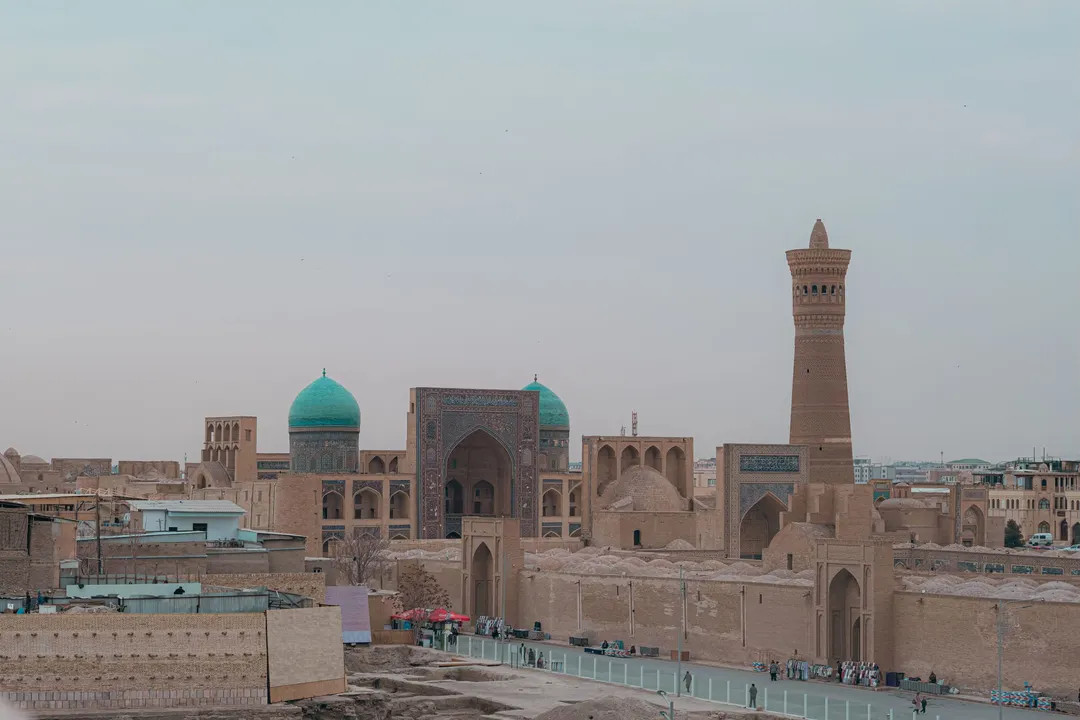
Bukhara is the most complete medieval city in Central Asia. Not a monument surrounded by a modern town, but a working old quarter of some 140 protected buildings, where the trading domes still trade, the ponds still gather people in the evening and the lanes between the monuments are lived in. The historic centre has been on the UNESCO World Heritage List since 1993.

History

The city is around two and a half thousand years old, grown on the delta of the Zarafshan where the river dies in the desert. It was a Sogdian caravan town when the Arabs took it in 709, and within a century it had become something more: under the Samanid emirs in the ninth and tenth centuries Bukhara was the capital of an empire stretching to Persia, the intellectual centre of the eastern Islamic world, and the city where Ibn Sina — Avicenna — found the library that made him. The poet Rudaki wrote here in Persian; Narshakhi wrote the city's history in 943 and it survives.

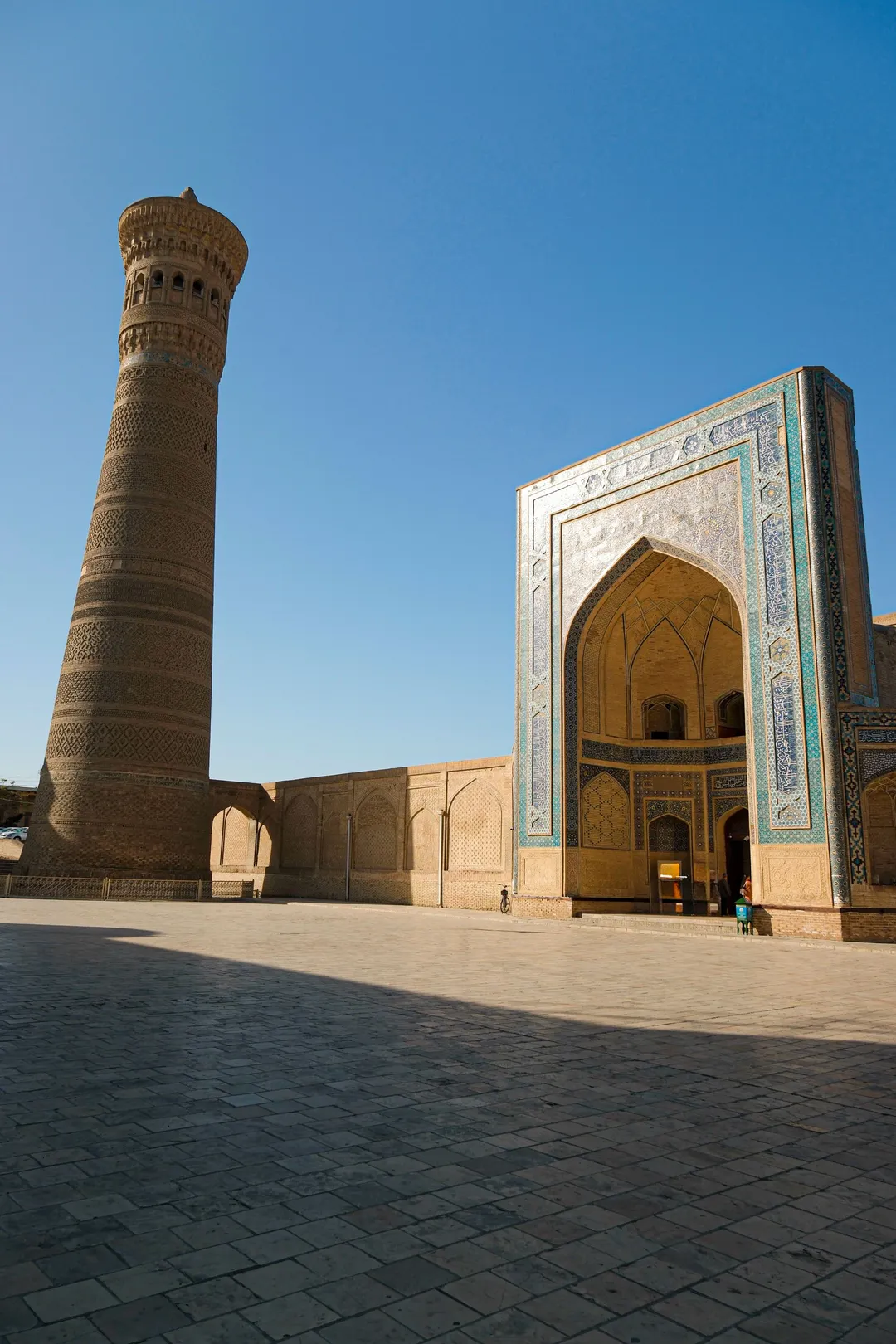
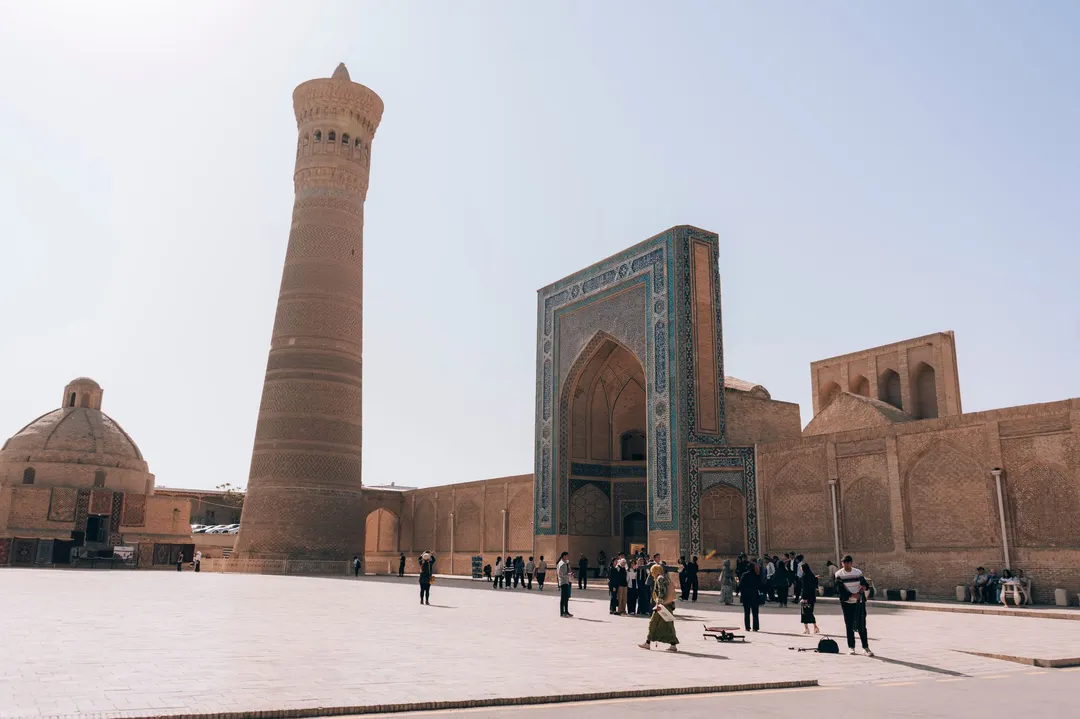
The Karakhanids raised the Kalyan minaret in 1127, 46 metres of patterned brick. When Genghis Khan took Bukhara in 1220, he left almost nothing standing — but he left the minaret, and the story that he tilted his head back to look at it and dropped his hat is the kind of thing every guide will tell you.

The city recovered under the Shaybanids in the sixteenth century and became a capital again: the madrasas, caravanserais and covered bazaars of the old town date largely from that revival, and at one point Bukhara had more than two hundred madrasas. The Emirate of Bukhara that followed grew closed and cruel in equal measure — two British officers, Stoddart and Conolly, were held in the Ark's pit and executed in 1842 during the Great Game. Russia made the emirate a protectorate in 1868; in 1920 the Red Army shelled the Ark, the last emir fled to Afghanistan, and a thousand years of Bukharan statehood ended.

What to see

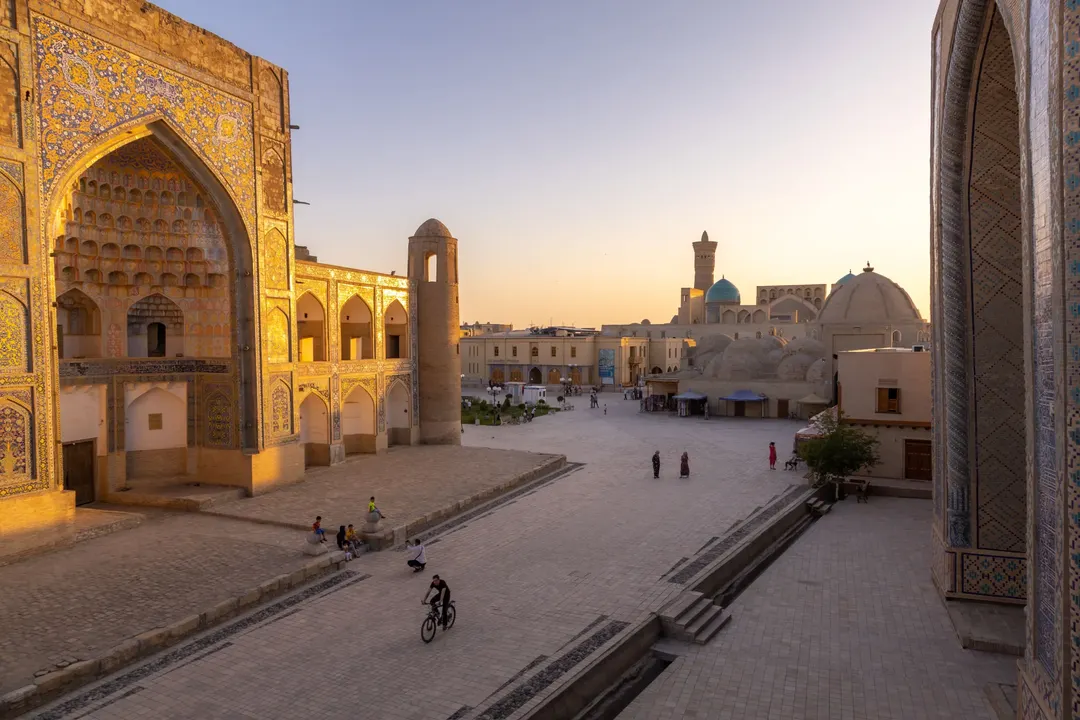
Poi-Kalyan is the heart of the city: the minaret, the great Friday mosque that holds ten thousand people, and the Mir-i-Arab madrasa of 1536 facing each other across one square. Mir-i-Arab is still a working madrasa, which is rare, and the courtyard is closed to visitors for that reason.

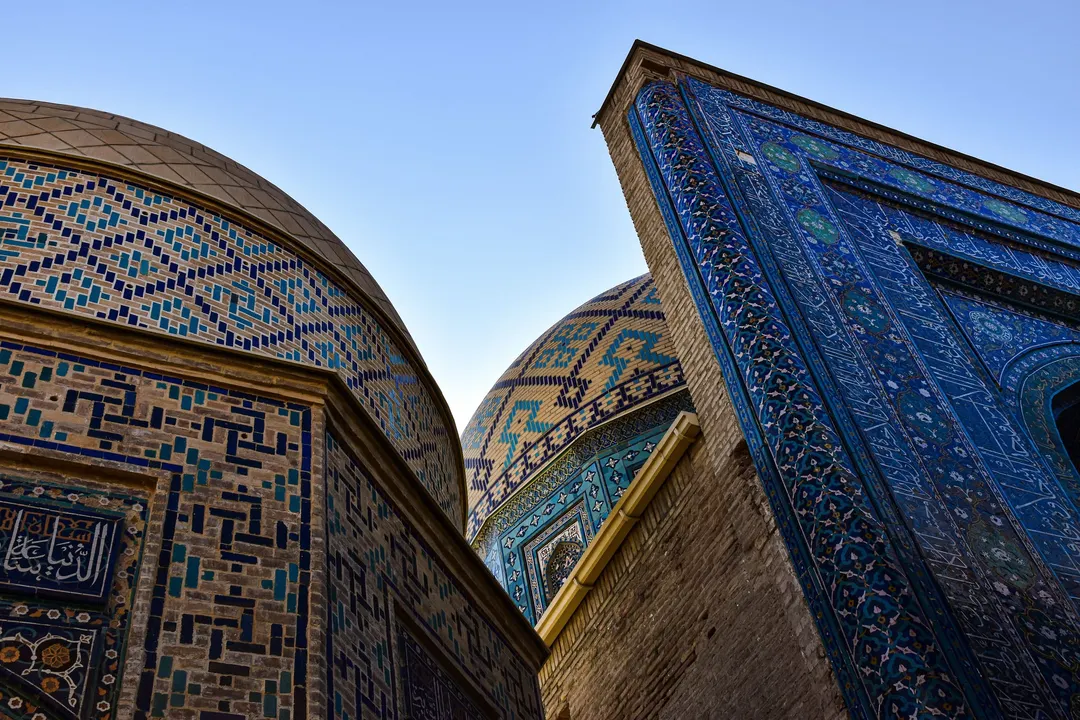
The Ismail Samani mausoleum, built around 900, is the oldest building in the city and quietly the finest in the country: a brick cube under a dome, its walls laid in patterns that change as the sun moves, with no tile and no colour at all. It survived because it had been buried in sand by the time the Mongols came.

The Ark is the emirs' fortress, a walled town within the town, with the throne court, the mosque, the prison and the pit. Opposite it stands Bolo Hauz, the emir's Friday mosque, with twenty painted wooden columns doubled in the water of its pond.

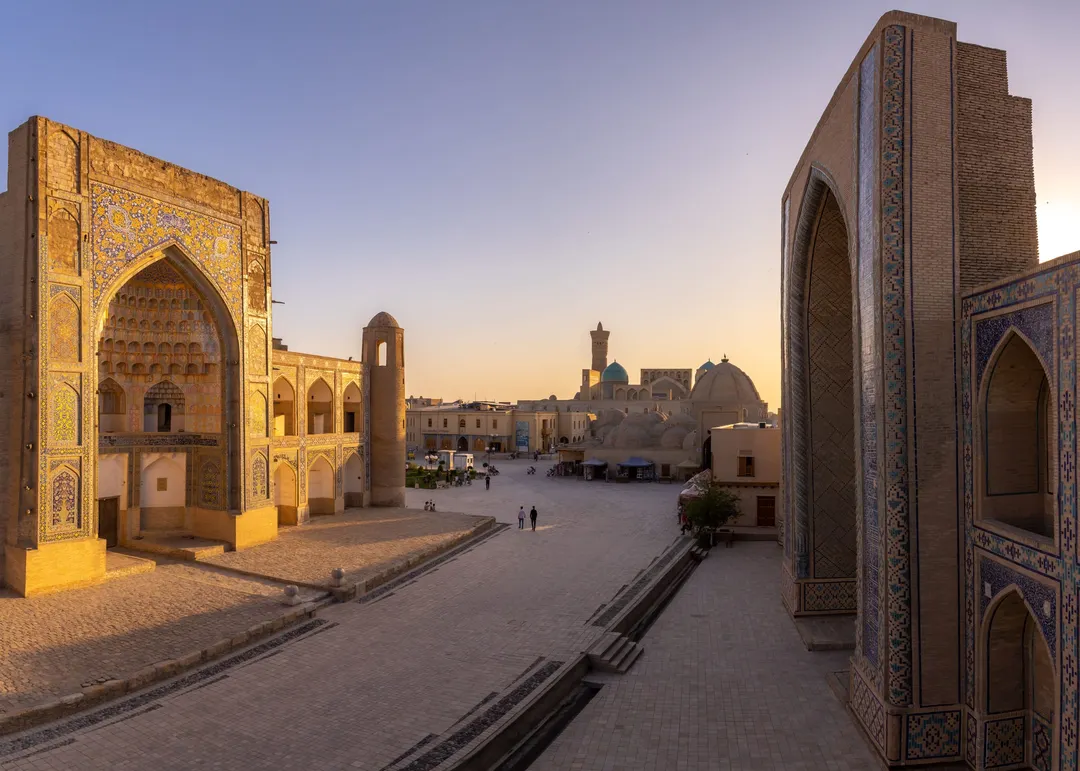
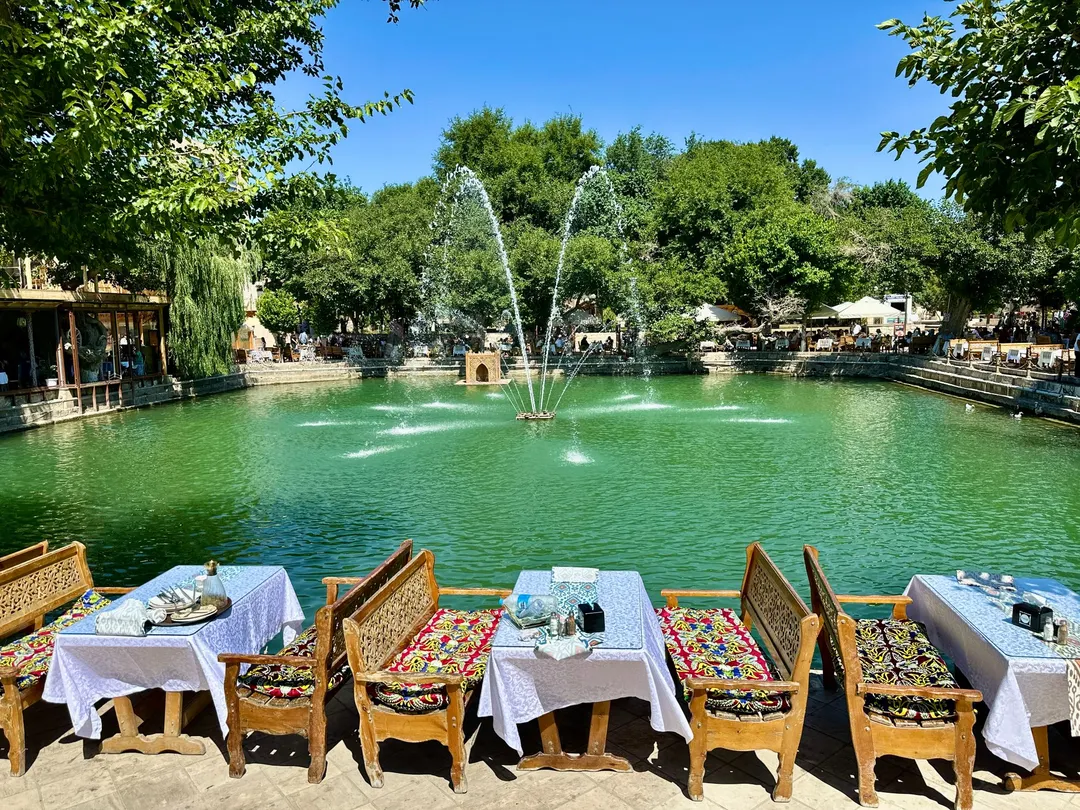
Lyabi-Hauz is where Bukhara sits in the evening: a stone-lined pool from 1620 under old mulberry trees, framed by the Kukeldash madrasa and the Nadir Divan-Begi ensemble. Between it and Poi-Kalyan run the trading domes — Toki Zargaron for jewellers, Toki Sarrafon for moneychangers, Toki Telpak Furushon for hatmakers — and the Magoki-Attari mosque, which stands over the layers of a Zoroastrian temple. Chor Minor, four small blue-capped towers built as a madrasa gatehouse in 1807, hides in the lanes to the east, and Sitorai Mohi-Xosa, the last emir's summer palace, stands four kilometres out of town with its peacocks and its mirror hall.

Craft and the table

Bukhara is a city of gold embroidery — zardozi, worked on velvet in families that have done it for generations — and of suzani, the large embroidered hangings a bride's family once made by hand. Knives are forged here, carpets are woven, and miniature painting has been revived in the old madrasas. In Gijduvan, 45 kilometres away, one family has made green-and-brown glazed ceramics for six generations and will teach you the wheel if you have an afternoon.

At the table, Bukhara is less about plov than about slow food: shivit oshi, the green dill noodles of the region, lamb baked in a tandoor, and a great deal of tea in the shade.

Practical notes

Two to three days, all of it on foot. Bukhara rewards slowness more than any other city on the route — the pleasure is in the lanes between the monuments, in workshops that are still workshops, and in sitting by the pond long enough for the light to change. The Afrosiyob high-speed train reaches Bukhara from Tashkent in under four hours and from Samarkand in about an hour and a half; the station is at Kagan, 12 kilometres from the old town.

Worth the extra half-day: Chor-Bakr, the necropolis of a Sufi lineage on the western edge of the city, and the Gijduvan workshops on the road towards Samarkand.

Best timeApril–May, September–November

Weather in Bukhara

Bukhara shares the desert climate of the west, softened a little by the oasis. Summer days are long and dry, and the difference between afternoon and midnight can reach fifteen degrees, so an evening by the Lyabi-Hauz pond is pleasant even in June. Winter is short, grey and cold; spring and autumn are the seasons the city was built for.

Right now12°Partly cloudy

Readings for 22:00, Tashkent time · Weather data from MET Norway

1. Bukhara
Bukhara

Tours through this region

11 days, 10 nights

Beyond the walls of Itchan Kala

Tashkent · Khiva · Bukhara · Samarkand

The three great Silk Road cities at the pace they deserve, with evenings inside Khiva’s walls and a private dinner in a Bukharan merchant’s house.

From €2,090 per guest

See itinerary
1 days, 0 nights

Bukhara on foot in a day

Bukhara

Lyabi-Hauz, the trading domes, the Kalyan minaret, the Ark and the Samanid mausoleum: the old town of Bukhara on foot, with a private guide.

From €100 per guest

See itinerary

8 days, 7 nights

Silk Road Essentials

Tashkent · Samarkand · Bukhara

An unhurried introduction to three great cities: the Registan, merchant Bukhara, old Tashkent, home cooking and Samarkand's winemaking heritage.

From €1,520 per guest

See itinerary

10 days, 9 nights

Silk Road & Flavours

Tashkent · Khiva · Bukhara · Samarkand

A ten-day journey through four celebrated cities, combining the walls of Khiva, Bukhara's family cuisine, two cooking workshops and a tasting at the Khovrenko wine museum.

From €1,900 per guest

See itinerary

12 days, 11 nights

Deep Uzbekistan: Cities, Mountains & Desert

Tashkent · Khiva · Bukhara · Nurata · Aydarkul · Samarkand

A richer itinerary pairing Silk Road cities with Western Tien Shan mountain scenery, a seasonal desert night, artisan encounters and three relaxed nights in Samarkand.

From €2,280 per guest

See itinerary

Doors that open for our guests

  • Dinner in a Bukharan merchant’s house

    Dinner in a Bukharan merchant’s house

    A candle-lit courtyard, a family recipe and the stories of the house.

Stories from the journal