Skip to content
XANAKA
XANAKA
EnquireWhatsAppBook a call
Samarkand

Regions

Samarkand: things to do and how to visit

The Timurid capital at its most monumental: the Registan, the blue domes of Shah-i-Zinda and the vast mosque of Bibi-Khanym.

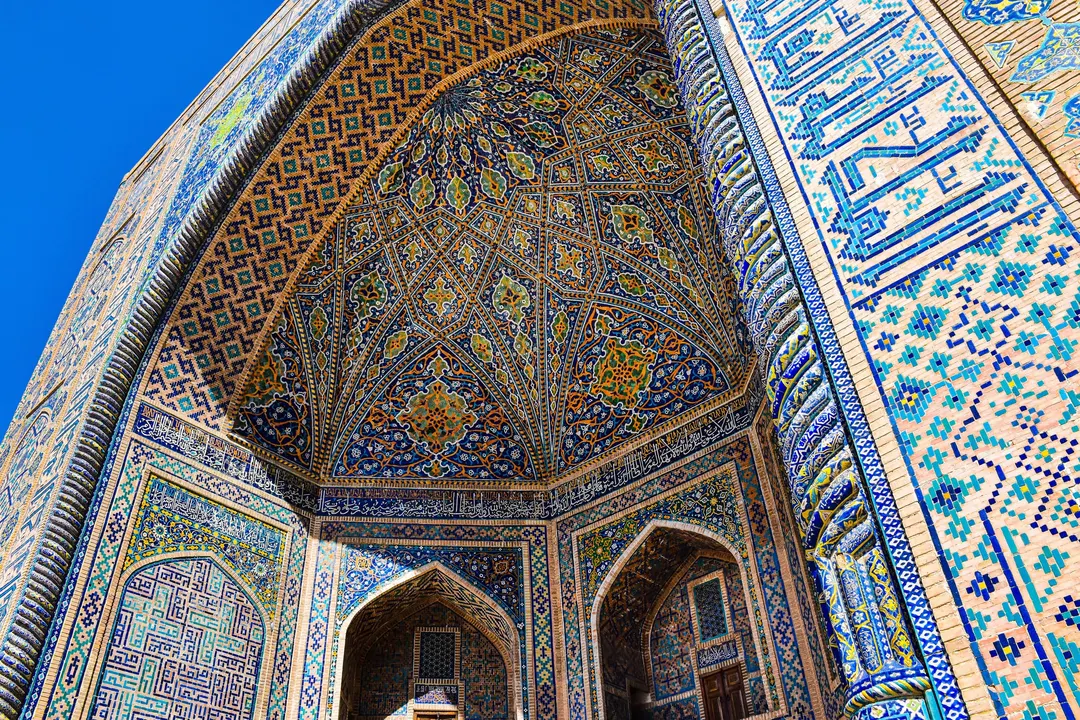
Samarkand is the monumental city of the route: wide squares, portals the height of a ten-storey building, domes of a ribbed turquoise that photographs never quite settle. It stands on the Zarafshan at about 700 metres, high enough for summer nights to cool. UNESCO inscribed it in 2001 under a title that says the thing plainly — Samarkand, Crossroads of Cultures.

History

The city began as Marakanda on the hill of Afrasiab, north of the modern centre, and it was already old when Alexander took it in 329 BC and reportedly said that everything he had heard of its beauty was true. Under the Sogdians it grew rich as the middleman of the silk trade, its merchants running colonies as far as China; the seventh-century murals dug out of Afrasiab and now in the museum there show ambassadors arriving from China, Korea and the steppe.

The Arabs came in the eighth century, and with them one of the great transfers of technology: prisoners taken after the battle of Talas in 751 are said to have brought the making of paper, and Samarkand paper supplied the Islamic world for centuries. Genghis Khan destroyed Afrasiab in 1220 and it was never rebuilt — the city standing today is the one Timur founded on the plain below it.

From 1370 Samarkand was Timur's capital, and he built it with the spoils and the captured craftsmen of half of Asia: Persian tilers, Indian masons, Syrian glassworkers. His grandson Ulugh Beg ruled as an astronomer more than as a king. The observatory he built around 1424 held a sextant with a radius of 40 metres sunk into the hillside; with it he measured the length of the year to within a minute of the modern figure and compiled a catalogue of more than a thousand stars that was still consulted in Europe two centuries later. He was murdered in 1449 at his son's instigation, the observatory was razed, and its foundations were rediscovered only in 1908.

The seventeenth century added the rest of the Registan under the governor Yalangtush Bahadur. The Russians took the city in 1868, and it served as the capital of Soviet Uzbekistan from 1925 until Tashkent replaced it in 1930.

What to see

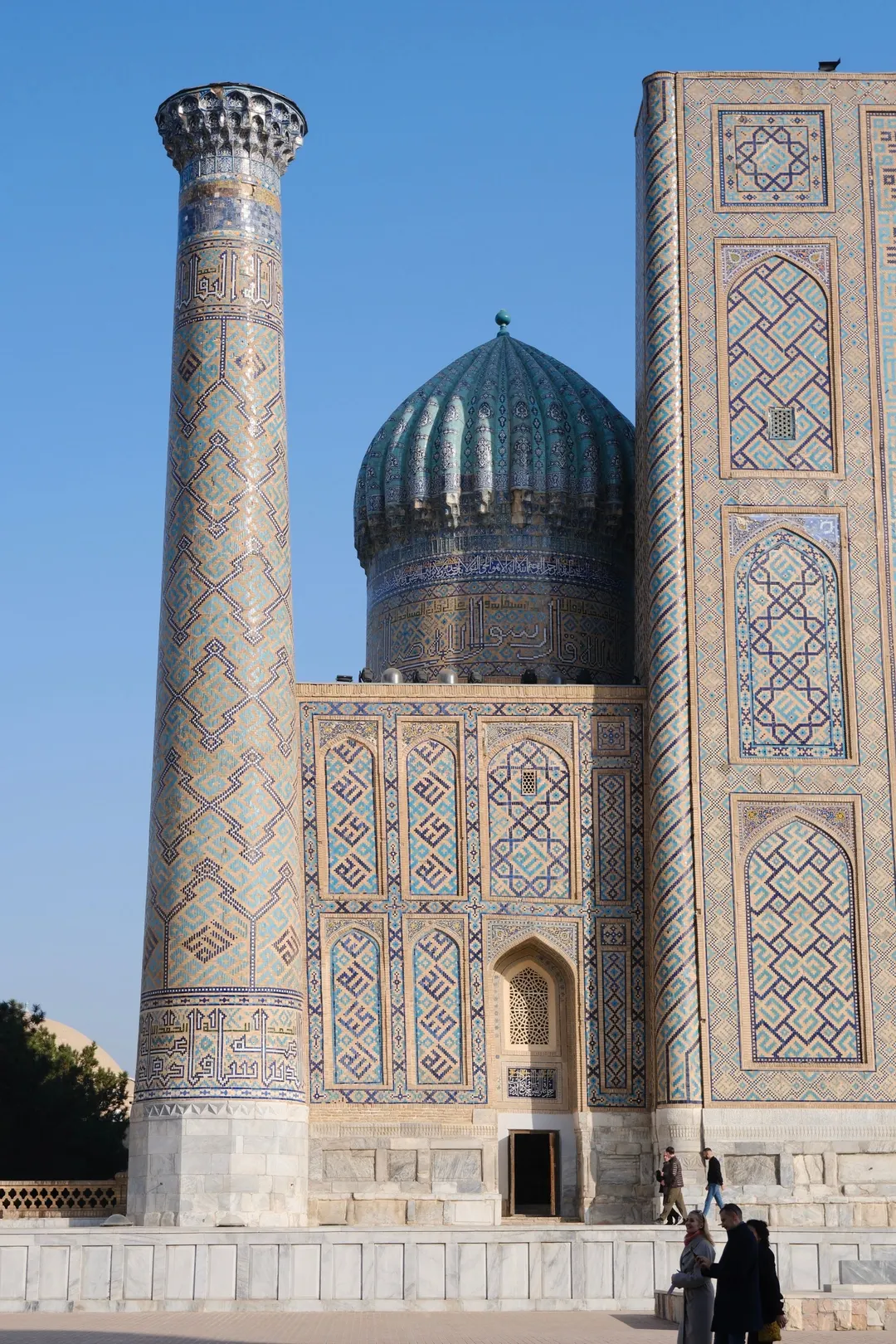
The Registan is three madrasas around one square: Ulugh Beg's, finished in 1420 and once a genuine university where the man himself taught; the Sher-Dor of 1619–1636, with the famous lion-tigers chasing white does across its portal, which by the rules of the architecture should not be there at all; and the Tilya-Kori of 1646–1660, whose prayer hall is lined with gold leaf laid flat, so that it glows rather than shines.

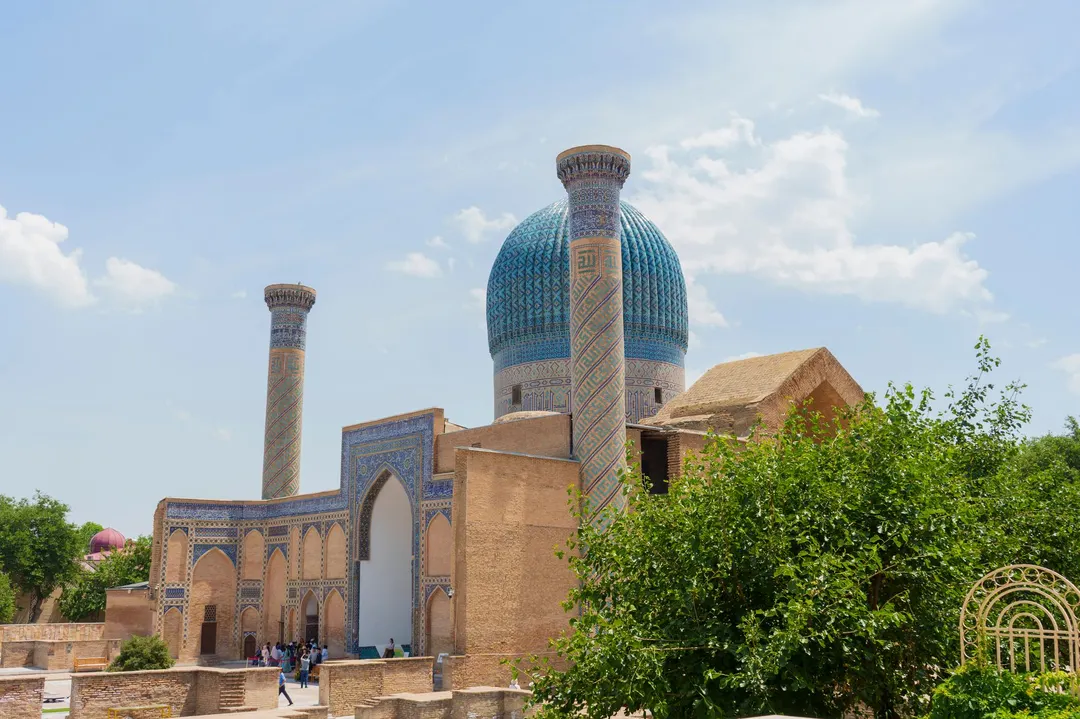
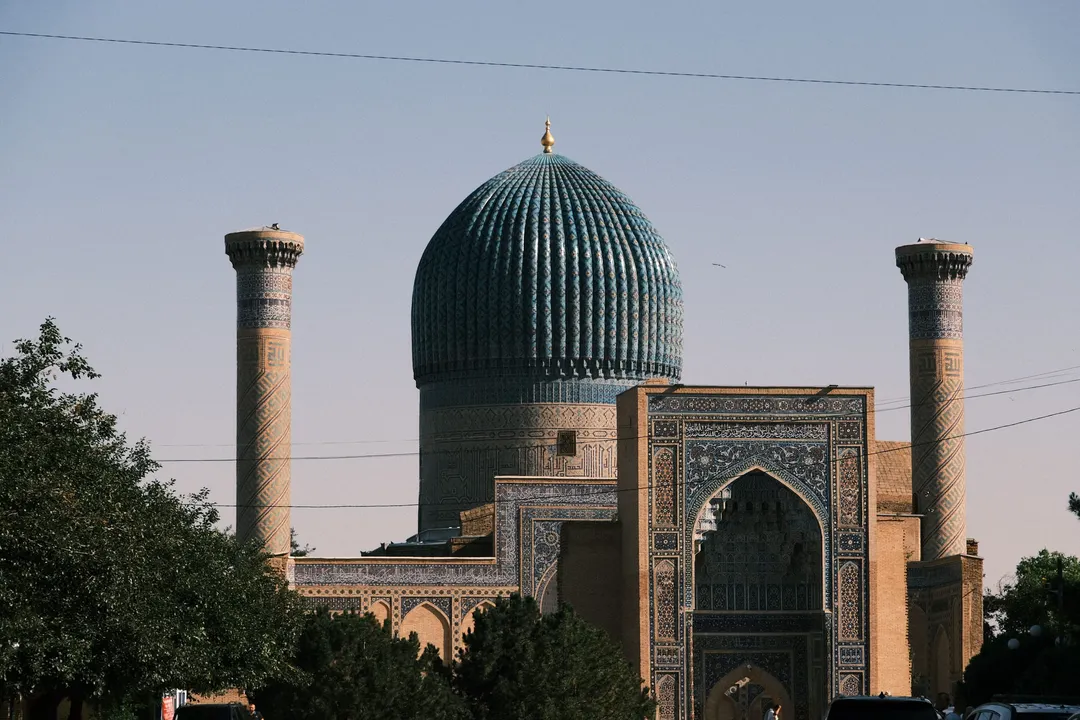
Gur-e-Amir holds the tombs of Timur, his sons and Ulugh Beg under a fluted dome. The crypt was opened by the Soviet anthropologist Mikhail Gerasimov in June 1941; the face he reconstructed from the skull, and the coincidence of the date with the German invasion, have kept the story alive ever since.

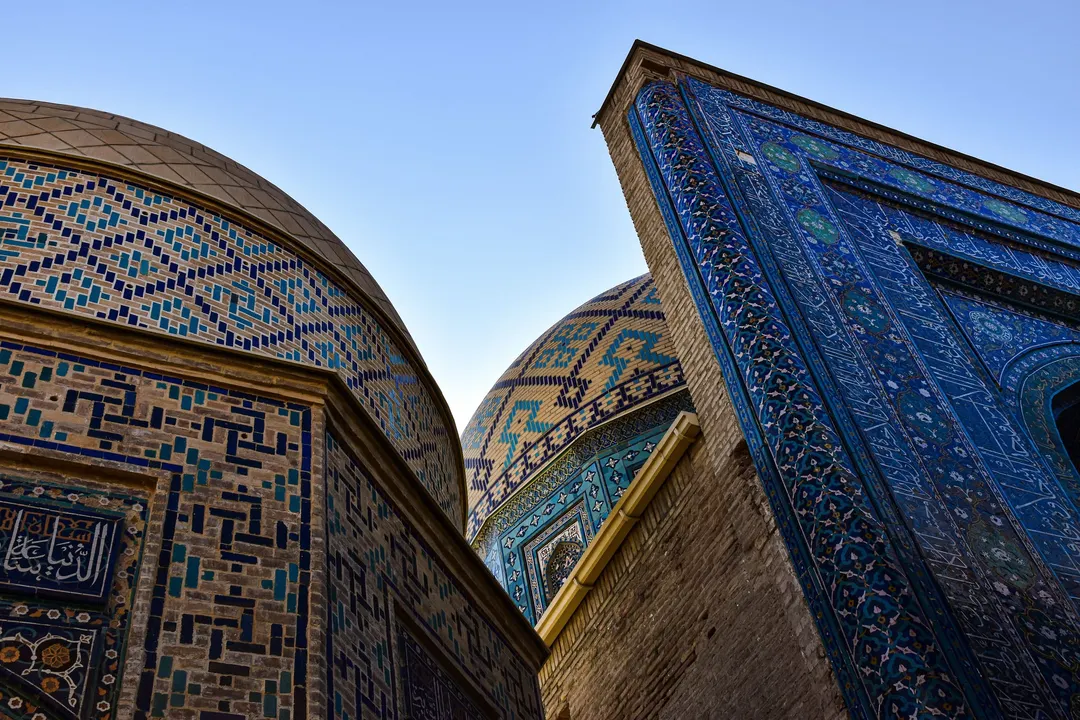
Shah-i-Zinda is the most beautiful thing in the country: a narrow stepped lane of some twenty mausoleums climbing the side of Afrasiab, built between the eleventh and the nineteenth centuries around the grave of Qusam ibn Abbas, a cousin of the Prophet. Every façade is different, and the tilework of the fourteenth-century tombs has never been bettered here.

Bibi-Khanym, raised in five years after Timur's Indian campaign, was the largest mosque of its age and began to come apart almost at once; it stands half-restored, half-ruin, which suits it. The Ulugh Beg observatory keeps the stone arc of the sextant, with a small museum beside it. Afrasiab Museum holds the Sogdian murals. Hazrat Khizr and the tomb of Khodja Doniyor — Daniel, by local tradition — stand at the edge of the old hill, and Siab bazaar below them sells bread, melons and everything else.

Craft and the table

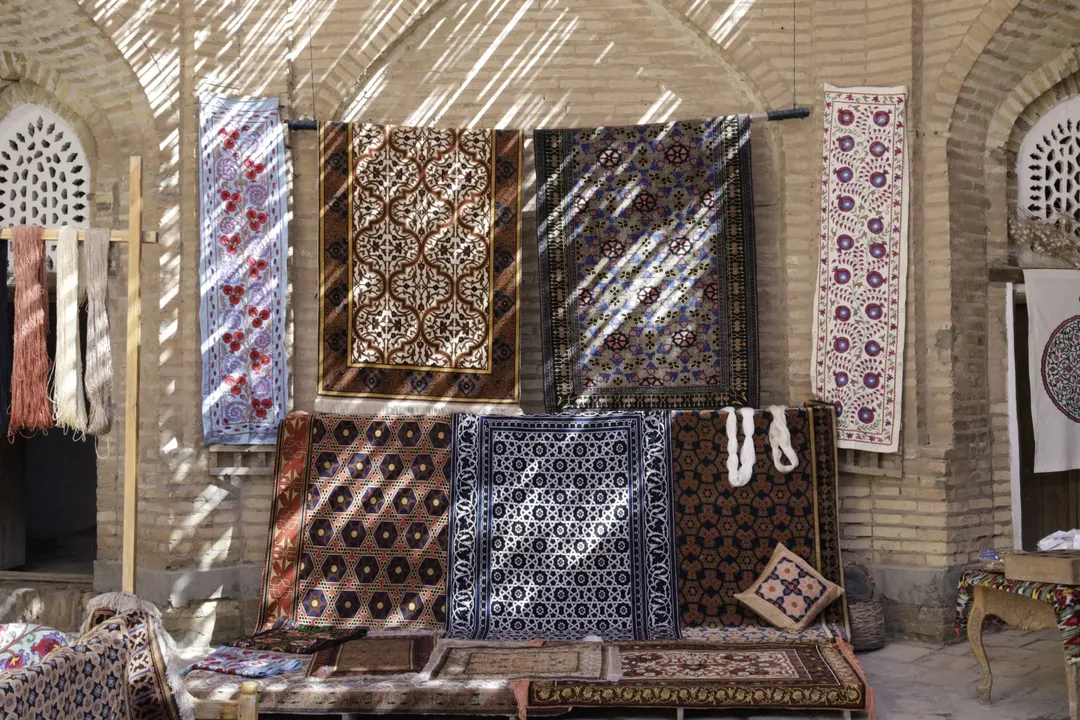
Samarkand bread is an institution: stamped, dense, and said to go stale slowly enough to travel. The city's plov is drier and lighter than Tashkent's, made with yellow carrots and raisins. At Konigil, on the edge of town, a workshop has revived the making of silk paper by the medieval method, water-wheel and all. Urgut, an hour to the south, holds a suzani market under plane trees on weekend mornings — the best embroidery shopping in Uzbekistan.

Practical notes

Two to three days; three if you intend to see Shah-i-Zinda twice, which you will want to. The Afrosiyob high-speed train arrives from Tashkent in a little over two hours and continues to Bukhara in another hour and a half, and the city has an airport with direct flights from several European cities.

Plan the day around the light: Shah-i-Zinda early, when the lane is cool and nearly empty, the Registan in the last hour before sunset. Shakhrisabz, over the mountain pass, makes the best day trip.

Best timeApril–May, September–November

Weather in Samarkand

Samarkand stands higher than the desert cities, and it shows: summer afternoons are hot but the nights cool down, and the air is drier than the numbers suggest. Spring arrives in March with green hills and orchard blossom around the city; autumn holds mild, clear weather well into November. January brings frost and occasional snow on the Registan.

Right now9°Clear sky

Readings for 22:00, Tashkent time · Weather data from MET Norway

1. Samarkand
Samarkand

Tours through this region

11 days, 10 nights

Beyond the walls of Itchan Kala

Tashkent · Khiva · Bukhara · Samarkand

The three great Silk Road cities at the pace they deserve, with evenings inside Khiva’s walls and a private dinner in a Bukharan merchant’s house.

From €2,090 per guest

See itinerary
1 days, 0 nights

Samarkand in a day

Samarkand

The Registan, Shah-i-Zinda, Gur-e-Amir and the Siab Bazaar in one unhurried day, with a private guide and a car between the sites.

From €150 per guest

See itinerary

8 days, 7 nights

Silk Road Essentials

Tashkent · Samarkand · Bukhara

An unhurried introduction to three great cities: the Registan, merchant Bukhara, old Tashkent, home cooking and Samarkand's winemaking heritage.

From €1,520 per guest

See itinerary

10 days, 9 nights

Silk Road & Flavours

Tashkent · Khiva · Bukhara · Samarkand

A ten-day journey through four celebrated cities, combining the walls of Khiva, Bukhara's family cuisine, two cooking workshops and a tasting at the Khovrenko wine museum.

From €1,900 per guest

See itinerary

12 days, 11 nights

Deep Uzbekistan: Cities, Mountains & Desert

Tashkent · Khiva · Bukhara · Nurata · Aydarkul · Samarkand

A richer itinerary pairing Silk Road cities with Western Tien Shan mountain scenery, a seasonal desert night, artisan encounters and three relaxed nights in Samarkand.

From €2,280 per guest

See itinerary

Stories from the journal