Skip to content
XANAKA
XANAKA
EnquireWhatsAppBook a call
Tashkent

Regions

Tashkent: things to do and how to visit

The capital and arrival city: the Hast Imam complex, Chorsu bazaar and a surprising legacy of Soviet modernist architecture.

Tashkent is where the journey usually begins: the capital, the main airport, the hub of the railways, and a city of more than two and a half million people that most travellers pass through too quickly. It is green, flat and unhurried, laid out in wide avenues under plane trees, and it makes a gentle first day for anyone arriving from a long flight.

History

There has been a town in this oasis for more than two thousand years — Chach, and later Binkath, on the trade road between the steppe and the settled south. It was taken by the Arabs in the eighth century, flourished under the Karakhanids, fell to the Mongols in 1219, and spent the early nineteenth century as a prize fought over by the khanates until Kokand annexed it. In 1865 General Chernyayev took the city with a force far smaller than its garrison, and Tashkent became the seat of the Russian Governorate of Turkestan — the administrative capital of Central Asia, with a European quarter laid out beside the old town.

The event that shaped the city visitors see happened on 26 April 1966, when an earthquake destroyed much of the centre and left hundreds of thousands of people without homes. The rebuilding drew architects and construction brigades from every Soviet republic, and the result is one of the most interesting collections of modernist architecture anywhere: concrete sun-screens cut like mashrabiya, mosaic façades, domed market halls, and a metro — opened in 1977, the first in Central Asia — whose stations were designed as public rooms rather than corridors.

What to see

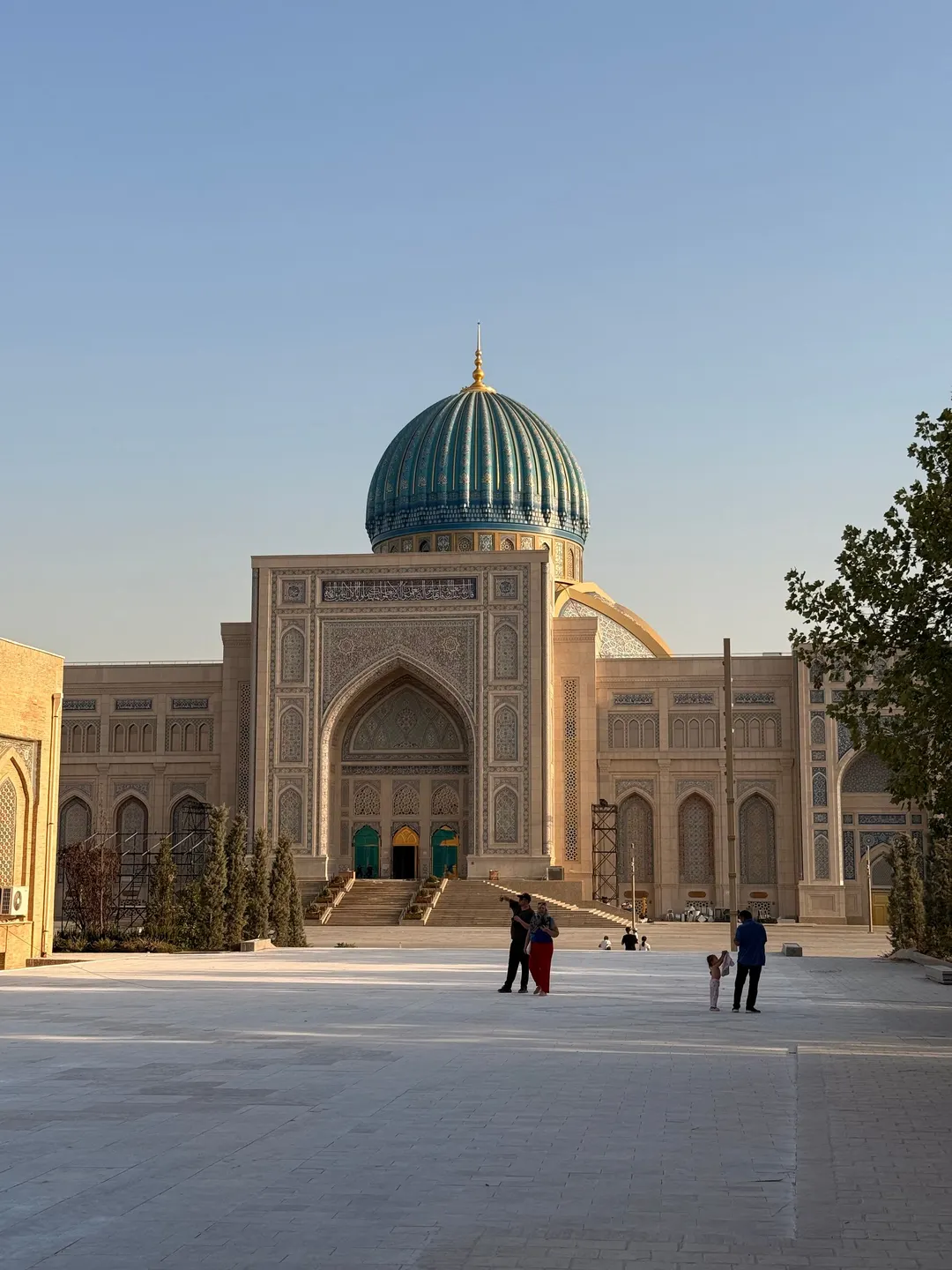
The Hazrati Imam complex is the religious centre of the city and holds its greatest treasure: the Uthman Quran, an eighth-century manuscript in Kufic script on deerskin, one of the oldest surviving copies in the world. Around it stand the Barakhan madrasa, the Tillya Sheikh mosque and the sixteenth-century mausoleum of Kaffal Shashi.

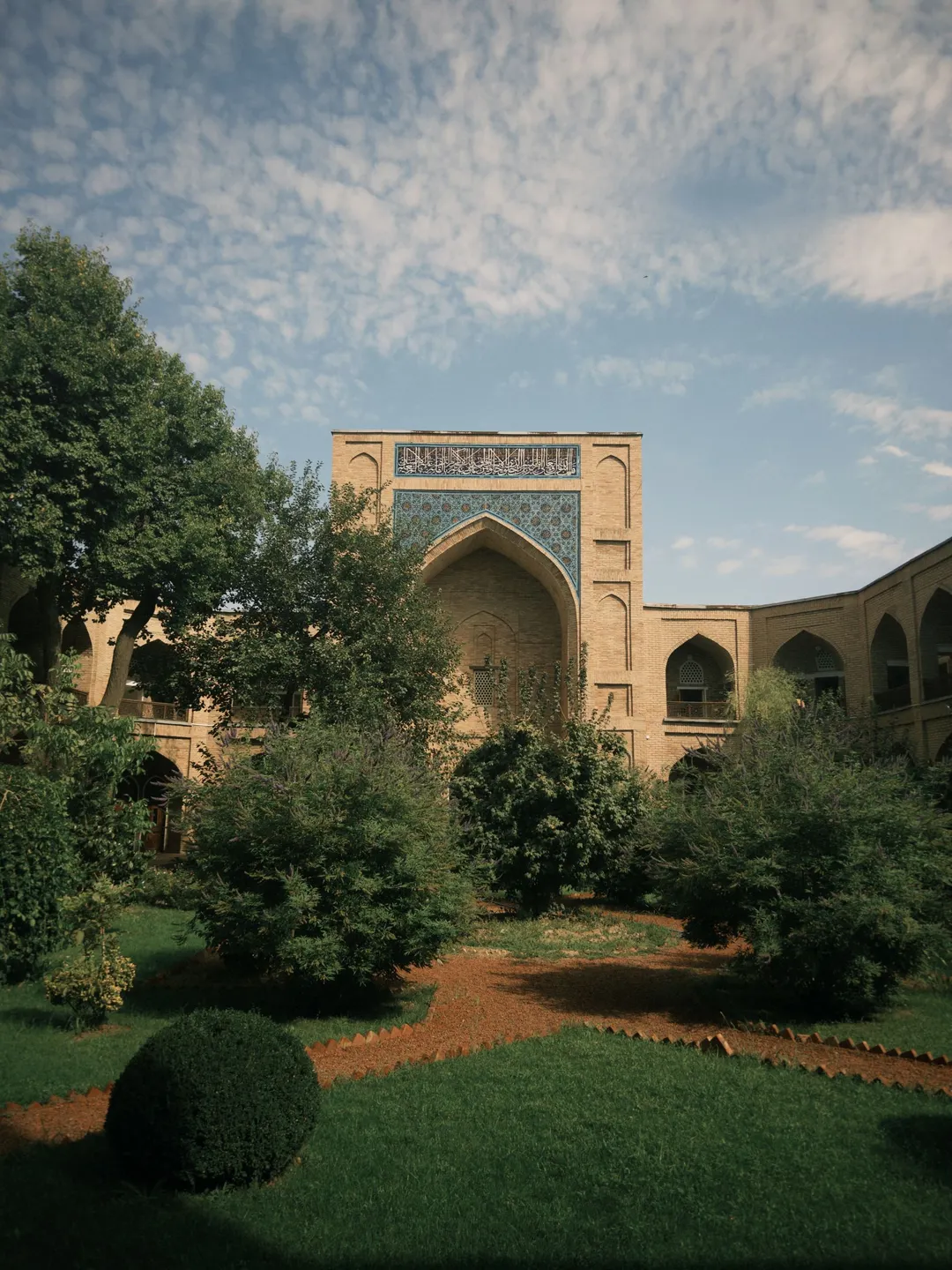
Chorsu bazaar, under its great ribbed dome, is the working market of the old town: bread stacked in towers, spices by the kilo, butchers, dried fruit, and the pickle rows where nobody speaks English and everybody offers you a taste. The Kukeldash madrasa stands above it, and the lanes of the old town — low houses, courtyards, mahalla mosques — run downhill behind.

The Museum of Applied Arts occupies a pre-revolutionary diplomat's house and is worth an hour for the carved and painted interiors alone. The State Museum of History explains the Kushans and the Sogdians better than any site does. And the metro is a sight in itself: Kosmonavtlar with its portraits of Gagarin and Tereshkova on dark blue glass, Alisher Navoi with its domed ceilings, Pakhtakor with its cotton mosaics. Photography underground has been allowed since 2018.

Craft and the table

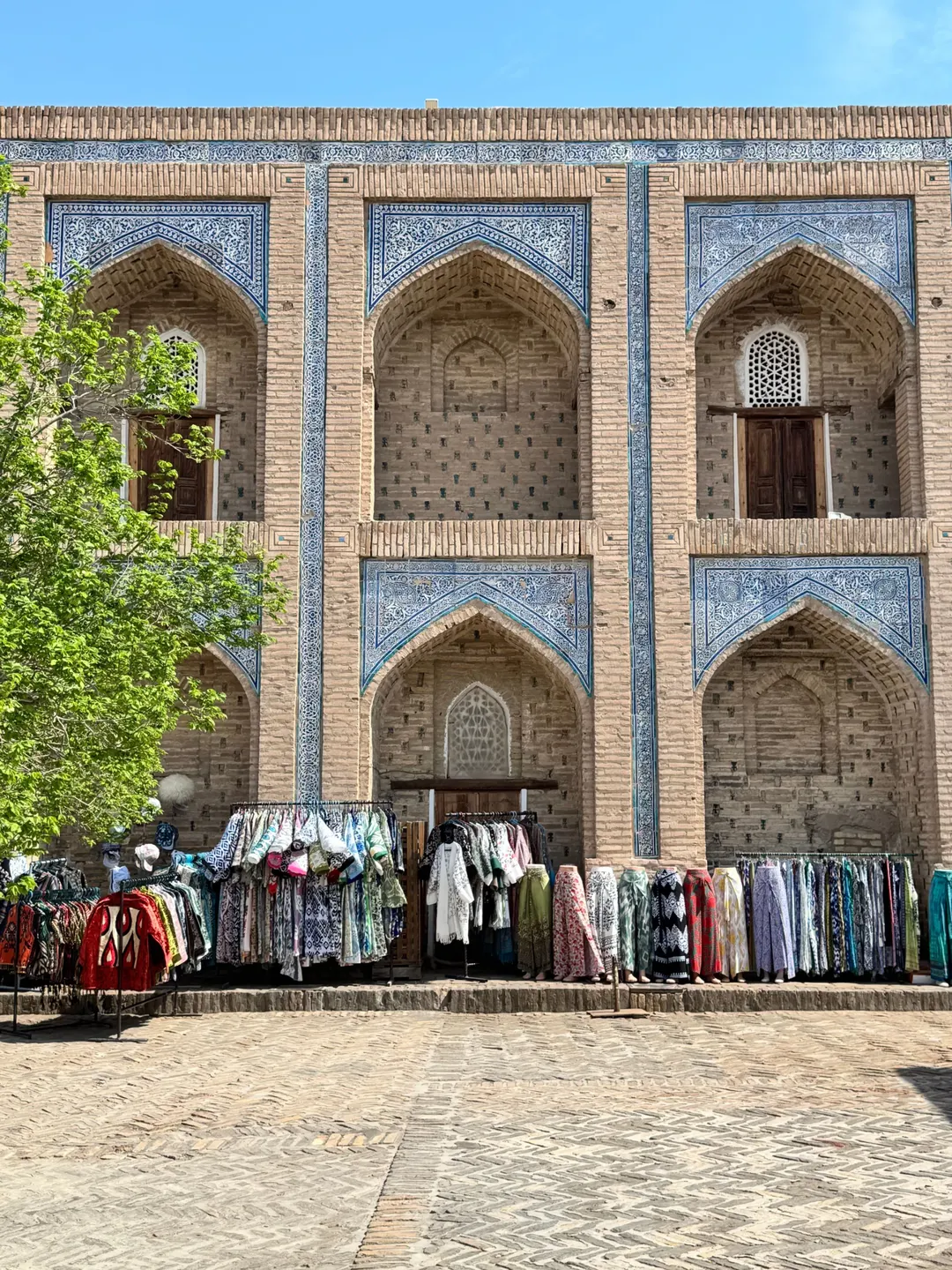
Tashkent is the country's plov capital, and the argument between its version — glossy, rich, with yellow carrots and a whole head of garlic — and Samarkand's is a permanent one. The Central Asian Plov Centre cooks it in cauldrons the size of a bathtub and sells out by two in the afternoon. Bread here is baked flatter and saltier than in Samarkand. For craft, the city is where the regions meet: shops in the old town carry Rishtan ceramics, Margilan silk, Bukhara embroidery, and the Human House and Abul Kasim madrasa workshops sell directly from the makers.

Practical notes

One or two days, and best used to adjust rather than to rush. High-speed Afrosiyob trains leave the central station for Samarkand and Bukhara several times a day and should be booked ahead in spring and autumn. The international airport is twenty minutes from the centre.

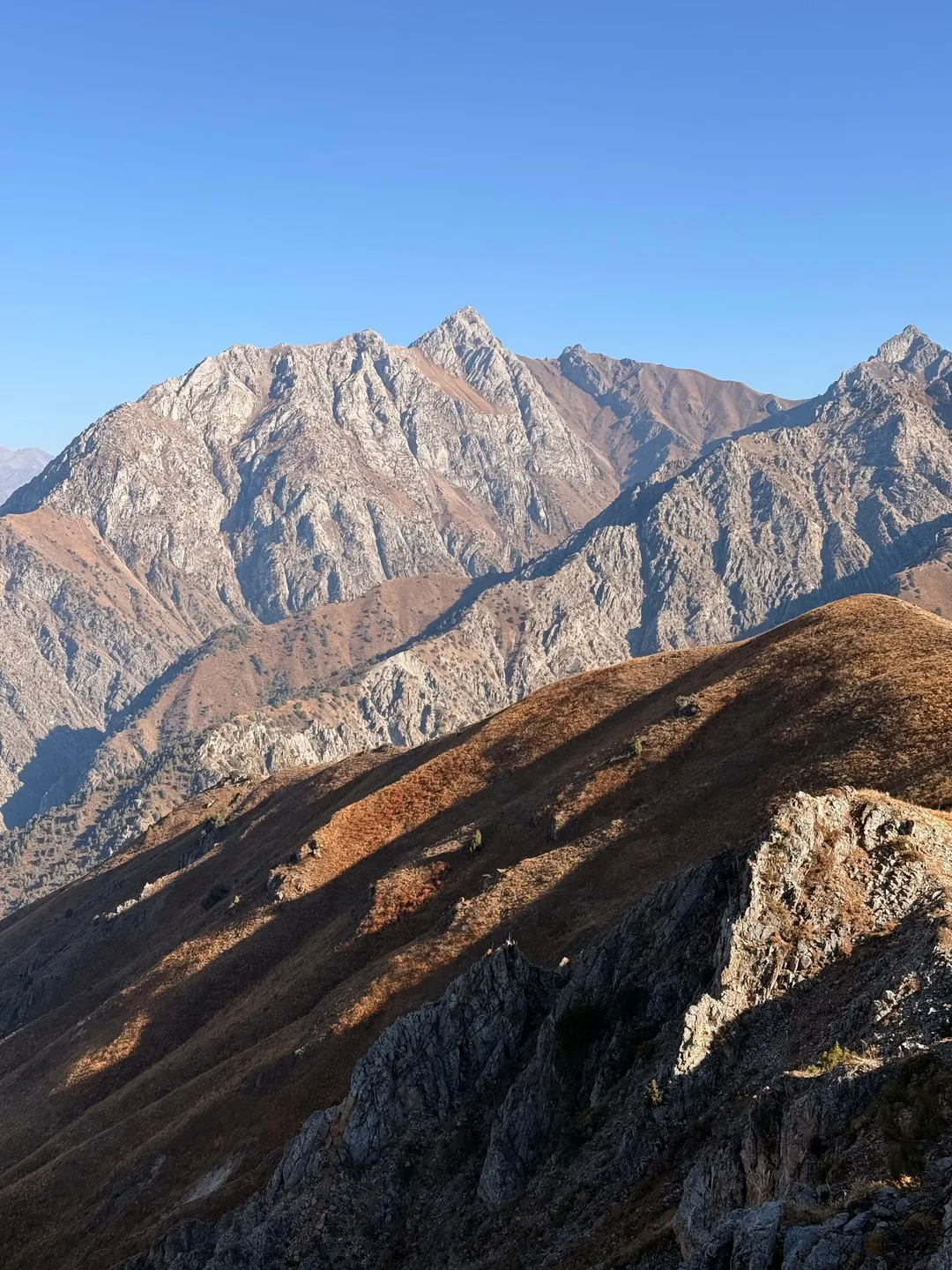
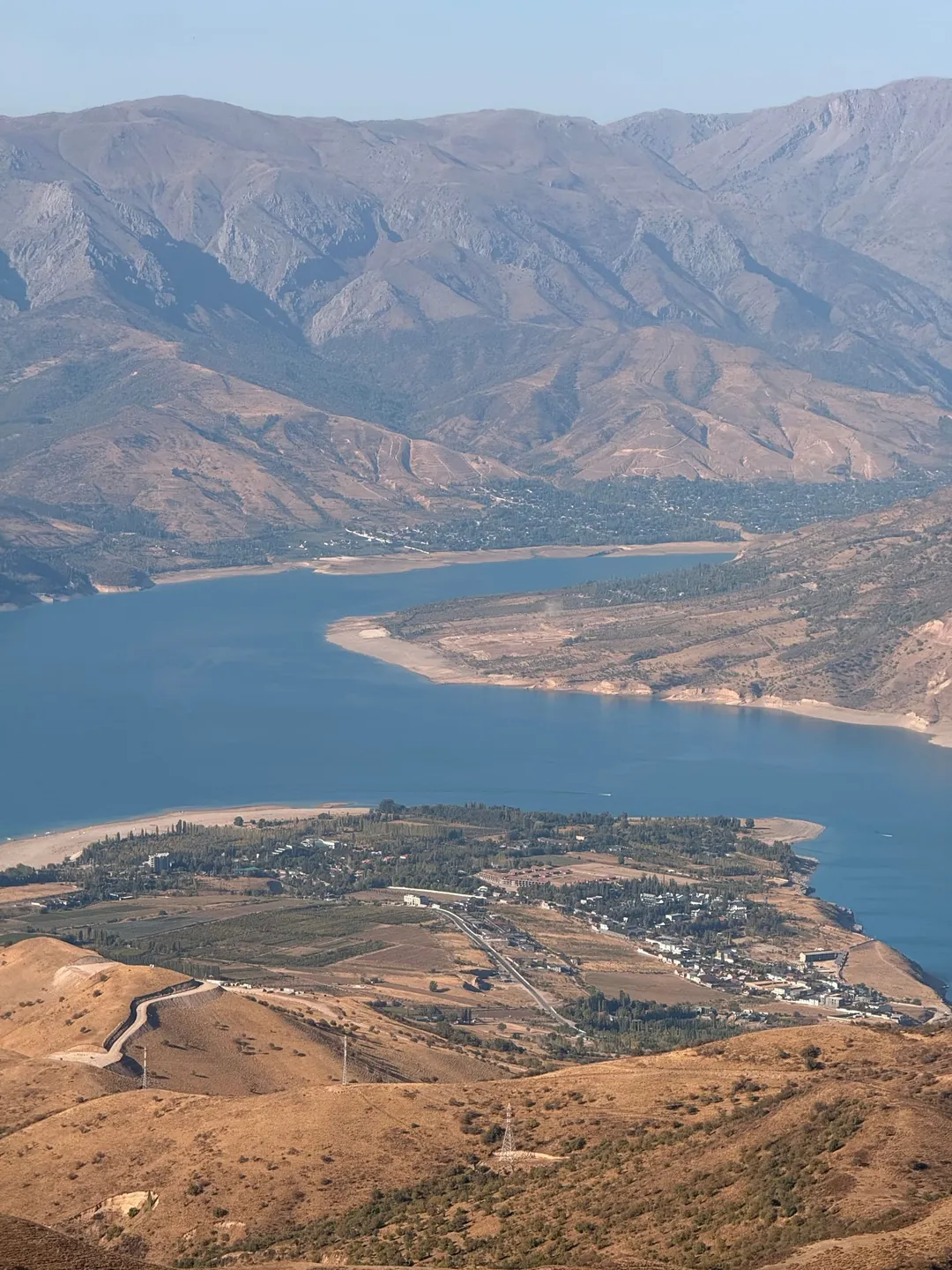
When the city is hot, the mountains are the answer: Chimgan and the Charvak reservoir are an hour and a half away, a good half-day, and in winter there is skiing at Amirsoy and Beldersay.

Best timeAll year

Weather in Tashkent

Tashkent has four distinct seasons and the mildest climate of the classic route. July and August are hot but the city has parks, shade and water; winter hovers around zero with a few snowy weeks. Most of the year’s rain falls in March and April, which is also when the mountains an hour away turn green.

Right now14°Clear sky

Readings for 22:00, Tashkent time · Weather data from MET Norway

1. Tashkent
Tashkent

Tours through this region

11 days, 10 nights

Beyond the walls of Itchan Kala

Tashkent · Khiva · Bukhara · Samarkand

The three great Silk Road cities at the pace they deserve, with evenings inside Khiva’s walls and a private dinner in a Bukharan merchant’s house.

From €2,090 per guest

See itinerary
1 days, 0 nights

Tashkent in a day

Tashkent

The Hast Imam complex and its ancient Quran, Chorsu Bazaar, the decorated metro stations and the modern city, with a private guide and driver.

From €150 per guest

See itinerary

8 days, 7 nights

Silk Road Essentials

Tashkent · Samarkand · Bukhara

An unhurried introduction to three great cities: the Registan, merchant Bukhara, old Tashkent, home cooking and Samarkand's winemaking heritage.

From €1,520 per guest

See itinerary

10 days, 9 nights

Silk Road & Flavours

Tashkent · Khiva · Bukhara · Samarkand

A ten-day journey through four celebrated cities, combining the walls of Khiva, Bukhara's family cuisine, two cooking workshops and a tasting at the Khovrenko wine museum.

From €1,900 per guest

See itinerary

12 days, 11 nights

Deep Uzbekistan: Cities, Mountains & Desert

Tashkent · Khiva · Bukhara · Nurata · Aydarkul · Samarkand

A richer itinerary pairing Silk Road cities with Western Tien Shan mountain scenery, a seasonal desert night, artisan encounters and three relaxed nights in Samarkand.

From €2,280 per guest

See itinerary

Stories from the journal